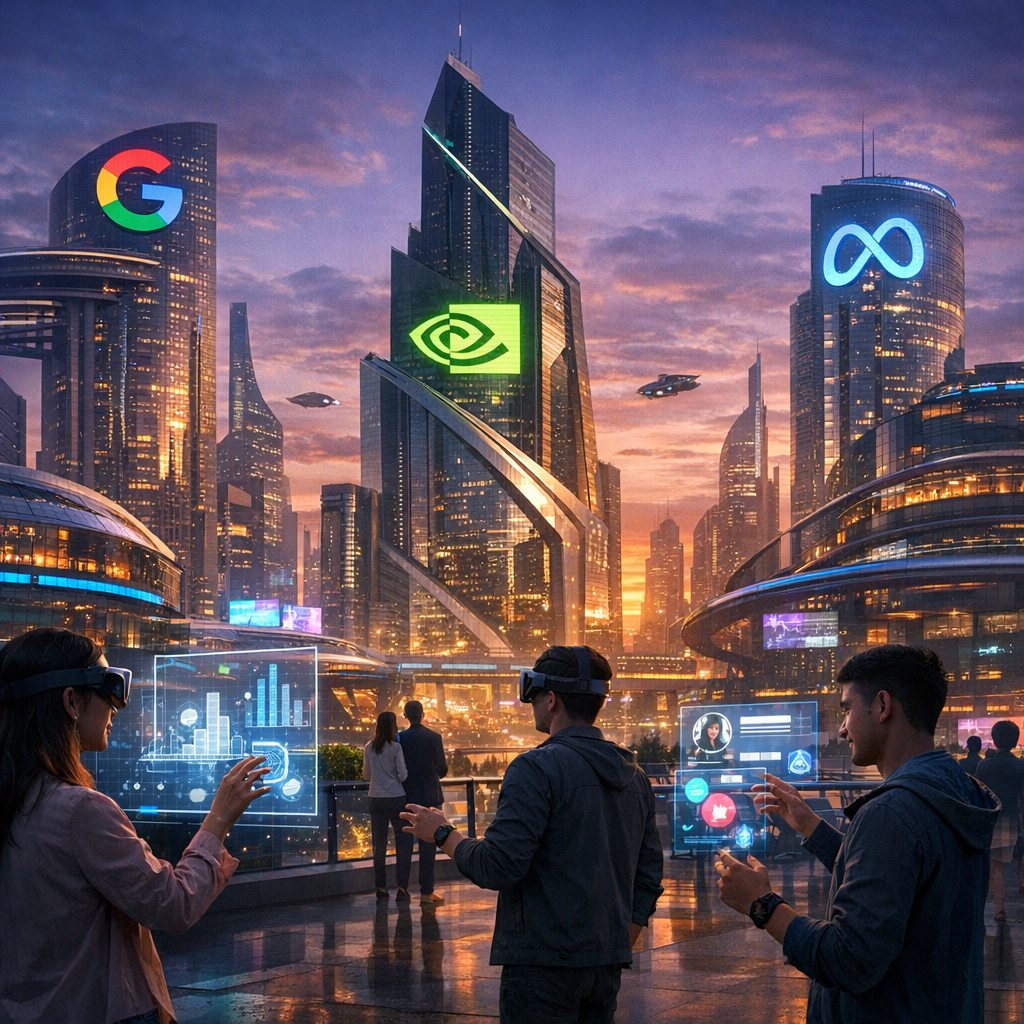
Innovations in the Digital Realm: Google, Nvidia, and Meta's Latest Moves
Related Analysis
In the ever-evolving digital landscape, three industry giants—Google, Nvidia, and Meta—are making waves with their latest announcements, each offering unique advancements and addressing significant market needs. These developments highlight the dynamic nature of technology, where accessibility, customization, and privacy are increasingly coming to the forefront.
Google's Leap into No-Code App Development
Google has recently unveiled a groundbreaking initiative that enables users to create personal Android apps without any prior developer experience. This move democratizes app development, allowing individuals to craft bespoke applications through simple prompts. The significance of this lies in its ability to empower users, providing them with the tools to bring their unique app ideas to life without the traditional barriers of coding expertise.
This no-code platform is poised to revolutionize how personal and niche apps are developed. Users can now create applications tailored to their specific needs or interests, whether for personal use or small-scale business operations. By lowering the entry threshold to app development, Google is fostering a new wave of creativity and innovation.
Nvidia's Enterprise and On-Device AI Models
Nvidia, known for its prowess in the AI and GPU sectors, has launched new open models designed to operate within enterprise environments and on personal computers. This development aligns with the growing trend of companies seeking to deploy their own AI models within their data centers, ensuring greater control over data privacy and model customization.
The introduction of these models is significant as it reflects Nvidia's commitment to facilitating AI accessibility while addressing privacy concerns. By enabling enterprises to run AI agents on their own infrastructure, Nvidia is empowering businesses with enhanced capabilities to tailor AI functionalities to their specific requirements, thereby optimizing operational efficiencies.
Moreover, the push towards on-device AI agents signifies a shift towards more private and secure AI interactions. Users can benefit from AI functionalities without the need for constant cloud connectivity, ensuring that personal data remains on the device, thus enhancing privacy and security.
Meta's Response to Terms of Service Backlash
Meta, formerly known as Facebook, has been at the center of controversy following its recent update to its terms of service. The changes, which have sparked concerns among publishers and business account holders, have prompted the company to make adjustments in response to the backlash.
The core of the issue lies in the perceived implications for data scraping, a practice that can potentially undermine the control businesses have over their content. Meta's initial terms appeared to grant the company extensive rights over user-generated content, raising alarms about data usage and privacy.
In response to the feedback, Meta has tweaked its terms of service to clarify its stance and to assure its users that content ownership rights remain intact. This move highlights the delicate balance that tech companies must maintain between leveraging user data for service enhancement and respecting user privacy and ownership rights.
The Broader Implications of These Developments
These announcements from Google, Nvidia, and Meta underscore a broader trend in the tech industry towards enhanced user empowerment, customization, and privacy. As digital solutions become more integrated into daily life, users and enterprises alike are demanding tools that cater specifically to their needs while safeguarding their data.
Google's no-code app development platform exemplifies the shift towards user-centric technology, where individuals with no technical background can engage directly in the digital creation process. This democratization of technology is set to inspire a new generation of innovators who can contribute to the digital ecosystem with fresh ideas and perspectives.
Nvidia’s focus on enterprise and on-device AI models addresses a critical need for customizable and private AI solutions. As businesses increasingly rely on AI for decision-making and operational efficiency, having the ability to tailor AI models to specific contexts becomes a valuable asset. Furthermore, on-device AI enhances user privacy, addressing one of the most pressing concerns in today’s data-driven world.
Meta's revision of its terms of service illustrates the importance of user trust and transparency. In an era where data privacy is paramount, companies must ensure their policies are clear and that user rights are protected. Meta’s adjustments serve as a reminder of the ongoing dialogue between tech companies and their users, highlighting the need for continuous engagement and adaptation to user feedback.
Conclusion
As we move further into 2026, the initiatives by Google, Nvidia, and Meta are indicative of a broader shift towards more inclusive, customizable, and privacy-conscious technology solutions. These developments not only reflect the current demands of users and enterprises but also set the stage for future innovations that prioritize accessibility, control, and security.
In this rapidly advancing digital age, the ability for users to create, customize, and protect their digital interactions will define the next phase of technological evolution. The steps taken by these tech giants today will undoubtedly influence the landscape of tomorrow, paving the way for a more empowered and secure digital future.