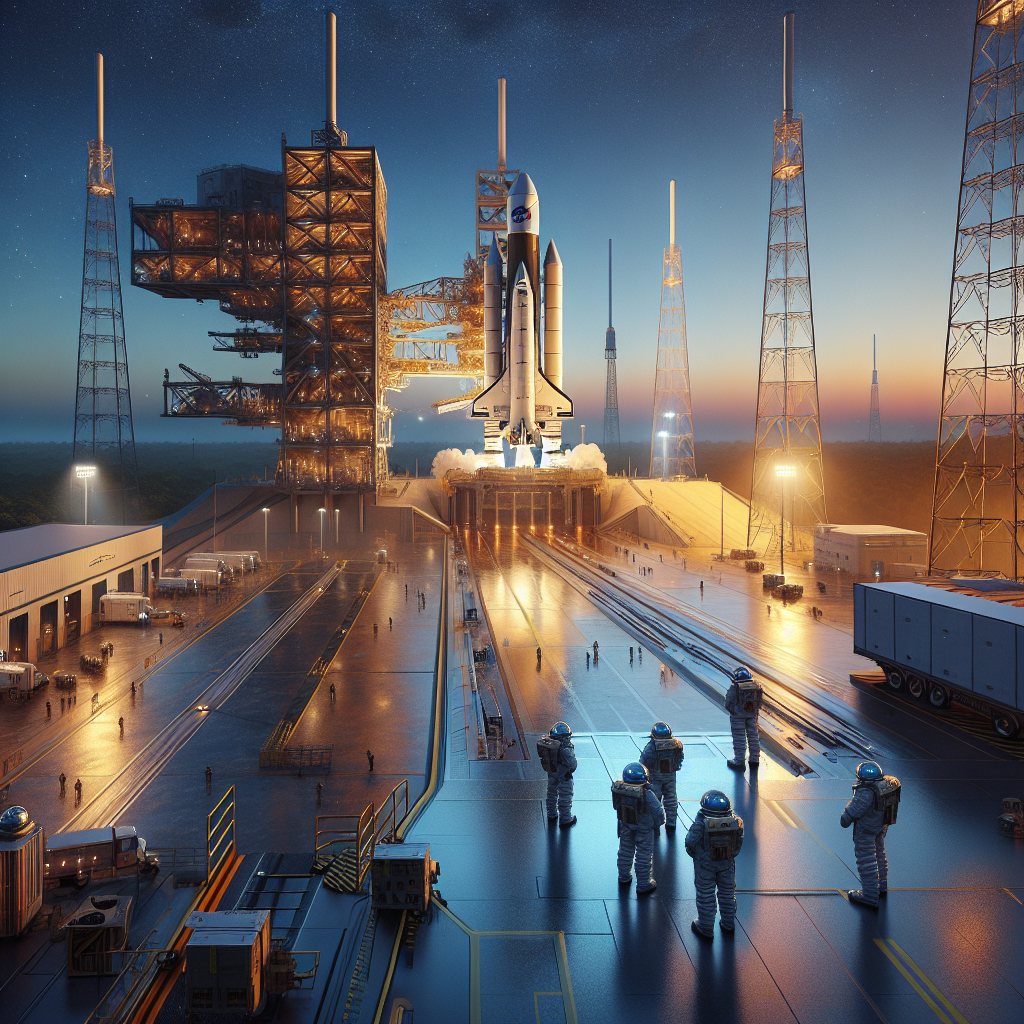
NASA's September Launch: A New Era in Space Exploration
Related Analysis
NASA is gearing up for an exciting new chapter in space exploration with the scheduled launch of its next big space telescope in early September. This mission promises to extend our understanding of the cosmos and unveil secrets that have long eluded scientists.
The telescope, named the Nancy Grace Roman Space Telescope, is expected to provide unprecedented views into the universe, allowing astronomers to explore distant galaxies, study exoplanets, and delve into the mysteries of dark energy and dark matter. This ambitious project represents a significant leap forward in our quest to comprehend the vastness of space.
Scheduled to launch from Cape Canaveral, Florida, the Nancy Grace Roman Space Telescope is equipped with cutting-edge technology that will enable it to capture images and data with exceptional precision. The telescope's wide-field instrument is designed to survey the sky with a field of view that is 100 times greater than that of the Hubble Space Telescope, providing a broader perspective on the universe.
NASA's decision to target a September launch follows years of meticulous planning and collaboration with international partners. The mission aims to build on the success of previous endeavors, such as the Hubble and James Webb Space Telescopes, while pushing the boundaries of what is possible in space observation.
The Nancy Grace Roman Space Telescope is set to revolutionize our understanding of the universe, offering insights that could reshape modern astrophysics.
This initiative comes at a time when interest in space exploration is at an all-time high. With private companies like SpaceX and Blue Origin making strides in commercial space travel, NASA's upcoming launch underscores the importance of continued investment in scientific research and technological innovation.
As the launch date approaches, anticipation is building within the scientific community and beyond. The data collected by the Nancy Grace Roman Space Telescope is expected to contribute to groundbreaking discoveries, enhancing our knowledge of the universe and inspiring future generations of astronomers and scientists.
The impact of NASA's efforts extends beyond the scientific realm. The technological advancements developed for this mission have the potential to influence various industries, from telecommunications to environmental monitoring, highlighting the broader benefits of space exploration.
In parallel with NASA's endeavors, the landscape of genetic research is undergoing significant changes. Recent developments in the field of designer babies have sparked ethical debates and led to the closure of companies pursuing human embryo editing.
Bootstrap Bio and Manhattan Genomics, once pioneers in the realm of genetic engineering, have recently shut down their operations. Both companies aimed to utilize gene-editing technologies to prevent serious diseases in human embryos. However, the ethical and regulatory challenges associated with this line of work have proven to be formidable obstacles.
The demise of these companies reflects the complexities and controversies surrounding genetic engineering. While the potential to eliminate hereditary diseases is undeniably appealing, the ethical implications of altering human embryos have raised concerns among scientists, ethicists, and the public alike.
As the debate continues, the future of designer baby technology remains uncertain. Striking a balance between scientific advancement and ethical responsibility is crucial to navigating the intricate landscape of genetic research.
While NASA and the realm of genetic research are making headlines, technological advancements are also transforming how we plan and experience outdoor adventures. Leveraging artificial intelligence, tools like Claude AI are revolutionizing travel planning, offering users unprecedented convenience and efficiency.
One Wall Street analyst recently shared their experience of using Claude AI to plan an entire hiking trip to the Adirondacks in just 30 minutes, free of charge. By connecting to third-party services such as TripAdvisor and AllTrails, Claude AI was able to map out a comprehensive itinerary, including trails, accommodations, and even a curated playlist for the journey.
This innovative use of AI demonstrates how technology can enhance our outdoor experiences, making trip planning more accessible and enjoyable. As AI continues to evolve, its applications in travel and leisure are likely to expand, offering users new ways to explore and engage with the world around them.
In conclusion, the upcoming launch of NASA's Nancy Grace Roman Space Telescope marks a significant milestone in space exploration, promising to deepen our understanding of the cosmos. Meanwhile, the shifting landscape of genetic research and the rise of AI-driven travel planning highlight the dynamic nature of scientific and technological progress. These developments underscore the importance of continued investment in research and innovation, paving the way for a future that is both exciting and transformative.