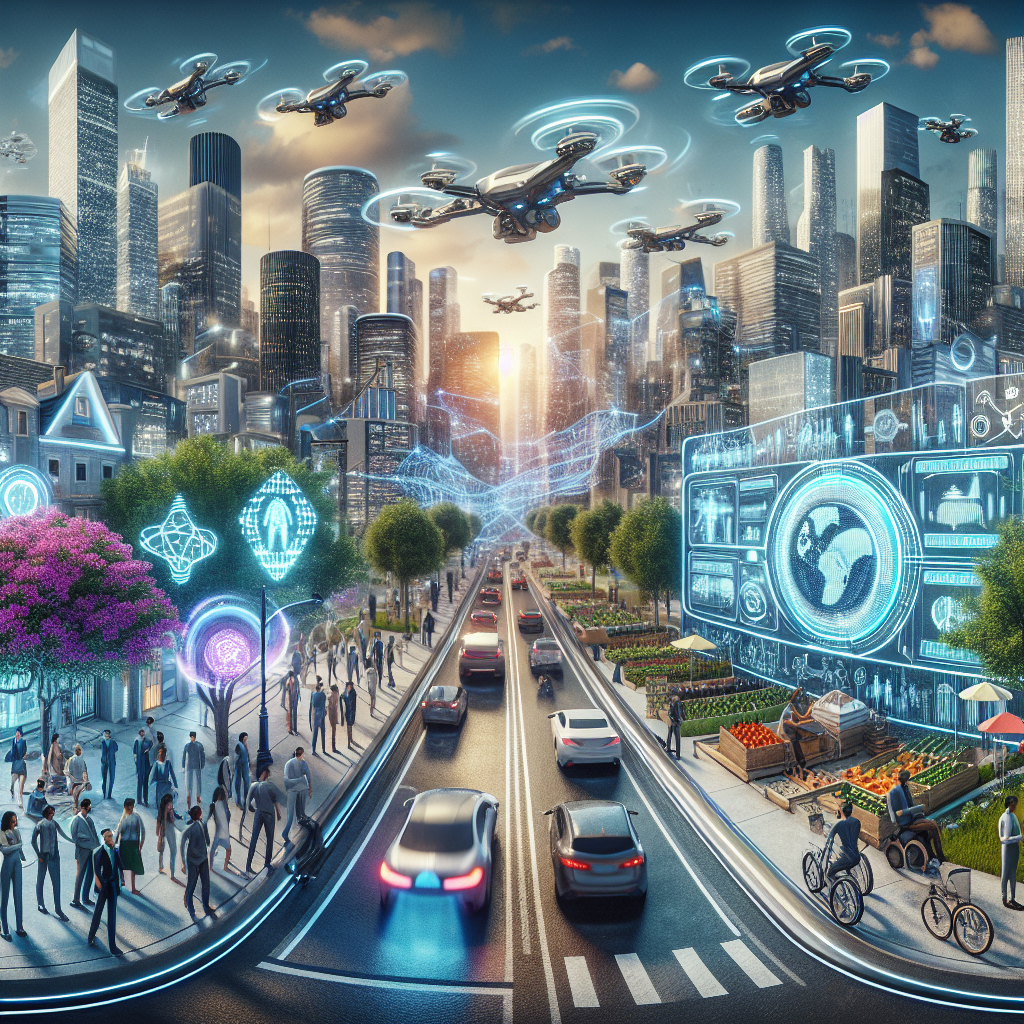
Artificial Intelligence: Transforming Industries and Shaping the Future
Related Analysis
As artificial intelligence (AI) continues to advance, its impact on various sectors, from consumer technologies to global industries, is becoming increasingly evident. The recent developments in AI are pushing boundaries, transforming traditional processes, and paving the way for a future where machine learning and automation are integral parts of everyday life.
One of the most significant developments in AI is its integration into consumer technology, particularly through virtual assistants like Amazon's Alexa. With advancements in AI, these assistants are moving beyond simple voice-activated tasks to becoming more autonomous and proactive participants in our daily routines. Amazon's ambitions for Alexa highlight this trend, as the company seeks to evolve from a voice command tool to an agentic AI capable of more complex interactions and decision-making processes.
Technological progress is also evident in the automotive industry, where AI is driving the evolution of autonomous vehicles. Nvidia’s collaboration with Mercedes to develop self-driving cars showcases the potential of AI to revolutionize transportation. These autonomous vehicles promise increased safety, efficiency, and convenience, offering a glimpse into a future where human intervention in driving may become obsolete.
Moreover, AI is making a remarkable impact on global industries, including finance, where it is both a tool and a challenge. The rise of generative AI has significantly altered the landscape of fraud, turning it into a highly organized system with rapid execution capabilities. This development is alarming for financial institutions worldwide, as the speed and complexity of AI-driven fraud outpace traditional detection methods.
“Artificial intelligence is not just a tool; it is reshaping industries and redefining possibilities across the globe.”
In the realm of consumer technology, Amazon's Alexa is at the forefront of transforming how we interact with AI. The device's evolution from a simple voice-activated assistant to an intelligent, proactive agent is a testament to the rapid advancements in AI. As technology catches up with Amazon's vision, Alexa is poised to offer more personalized and intuitive interactions, enhancing user experience and becoming an indispensable part of daily life.
The automotive industry is also witnessing a paradigm shift with the advent of AI-powered autonomous vehicles. My firsthand experience in an Nvidia-powered autonomous Mercedes during the GTC 2026 conference was nothing short of revolutionary. The seamless integration of AI in driving not only promises to enhance road safety and efficiency but also signals a future where human drivers may become a thing of the past. This technology is set to redefine our understanding of transportation, offering unprecedented levels of convenience and autonomy.
However, the rise of AI also presents challenges, particularly in the realm of financial fraud. With generative AI, fraud has scaled into a $400 billion global industry. The speed and sophistication of AI-driven deception methods pose significant risks to financial institutions, which are often ill-equipped to respond effectively. As fraudsters leverage AI to exploit vulnerabilities, there is an urgent need for robust countermeasures and innovative solutions to safeguard against these threats.
- AI is revolutionizing consumer technology, making virtual assistants more autonomous and interactive.
- The automotive industry is being transformed by AI, with autonomous vehicles paving the way for safer and more efficient transportation.
- Generative AI is turning financial fraud into a highly organized industry, challenging institutions to develop faster, more effective responses.
The implications of AI's advancements are profound, with the potential to reshape industries and redefine our interactions with technology. As AI continues to evolve, it is crucial for stakeholders across various sectors to embrace these changes and prepare for a future where AI is an integral part of our lives. Whether through enhancing consumer experiences, revolutionizing transportation, or safeguarding financial systems, AI stands at the forefront of innovation, driving progress and shaping the future of industries worldwide.
In conclusion, the transformative power of AI is undeniable. From enhancing the capabilities of virtual assistants like Alexa to driving the development of autonomous vehicles and challenging the financial sector with sophisticated fraud methods, AI is reshaping the landscape of modern technology. As we move forward, embracing these advancements and addressing the challenges they bring will be key to unlocking the full potential of AI in shaping a future where technology and humanity coexist harmoniously.