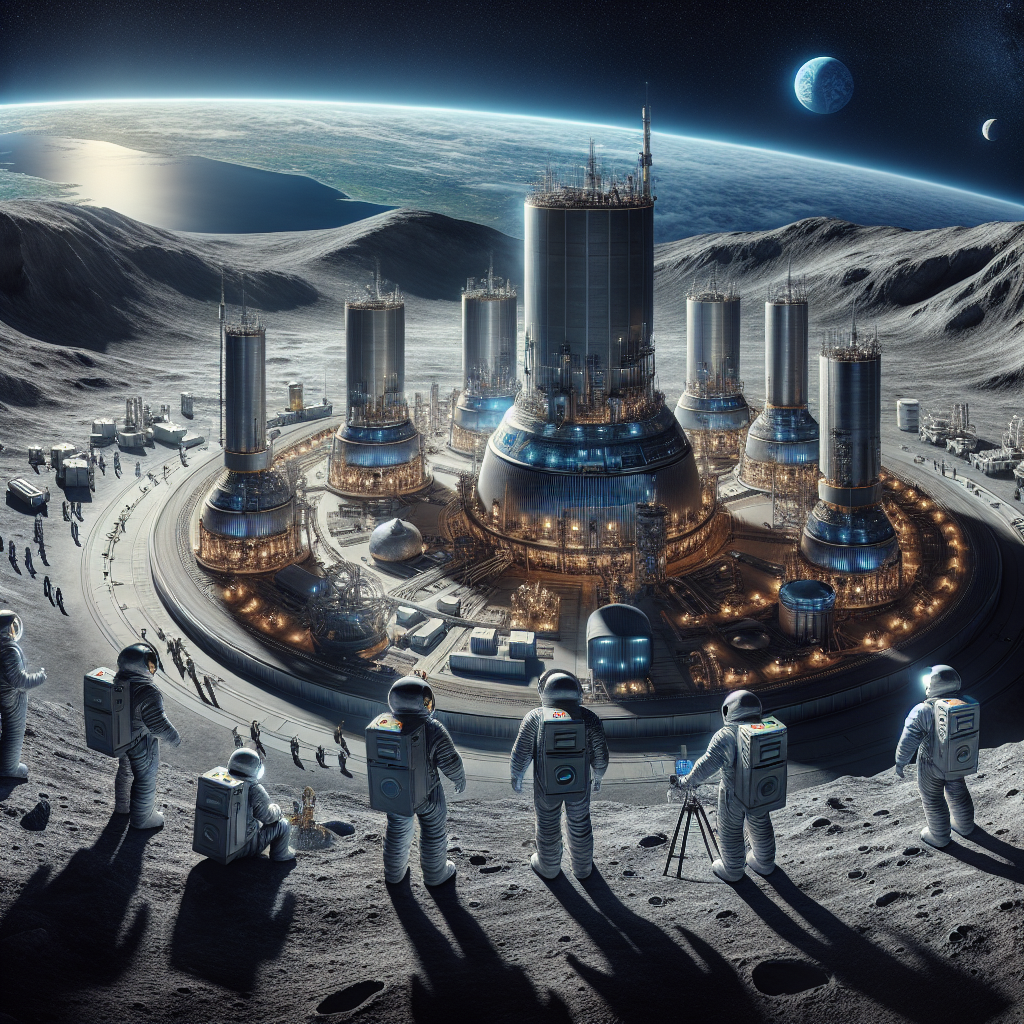
Nuclear Reactors on the Moon: A Collaborative Endeavor by NASA, DoD, and DoE
Related Analysis
In a groundbreaking move that promises to revolutionize space exploration and energy sustainability, NASA has joined forces with the Departments of Defense and Energy to place nuclear reactors on the Moon. This ambitious project marks a significant leap forward in utilizing nuclear energy for space exploration and potentially setting the stage for long-term human colonization of the Moon.
The announcement from the White House underscores the strategic importance of this collaboration. As space missions become more complex and extended, the need for reliable, sustainable power sources becomes paramount. Nuclear reactors, with their ability to provide continuous power, are ideal for supporting both lunar bases and spacecraft in orbit.
The collaboration between these major federal entities highlights a unified approach to overcoming the challenges of lunar exploration. By pooling resources and expertise, NASA, the DoD, and the DoE aim to establish a robust framework for the deployment of nuclear reactors beyond Earth.
Why the Moon?
The Moon serves as an ideal testing ground for new technologies that can later be applied to Mars and beyond. Its proximity to Earth allows for relatively easier logistics and communication, making it a suitable candidate for testing nuclear power systems. The Moon’s harsh environment also provides a perfect setting to assess the resilience and reliability of these systems.
Harnessing nuclear power on the Moon could support a variety of missions, from scientific exploration to the establishment of permanent lunar bases. With nuclear reactors, astronauts will have access to a consistent energy supply, crucial for life support systems, scientific instruments, and potentially even for fuel production through resource utilization on the lunar surface.
The Role of Nuclear Reactors in Space Exploration
Nuclear reactors have long been considered viable energy sources for space missions due to their efficiency and long operational life. Unlike solar power, which is dependent on sunlight and thus limited by the lunar night cycle, nuclear reactors can provide uninterrupted power.
These reactors are designed to be compact, safe, and efficient, with the capability to operate for years without refueling. This makes them particularly attractive for long-duration missions, where maintenance and resupply are challenging.
Challenges and Considerations
While the prospect of nuclear reactors on the Moon is exciting, it is not without its challenges. Safety is a primary concern, both in terms of the reactors' operation and their transport from Earth to the lunar surface. The reactors must be designed to withstand the stresses of launch and landing, as well as the extreme conditions on the Moon.
Regulatory and environmental considerations also play a significant role. The use of nuclear power in space requires careful planning to ensure compliance with international treaties and to minimize the impact on the lunar environment.
Moreover, public perception of nuclear energy, particularly in space, must be managed through transparent communication and education about the safety protocols and benefits of using such technology in space exploration.
A Collaborative Vision for the Future
This initiative is a testament to the power of collaboration across government agencies. By leveraging the expertise of NASA, the DoD, and the DoE, the project aims to overcome the technical and logistical challenges associated with deploying nuclear reactors on the Moon.
The success of this project could pave the way for further advancements in space exploration technologies, ultimately supporting human missions to Mars and beyond. It also sets a precedent for future collaborations in space exploration, where government agencies, private companies, and international partners work together to achieve common goals.
The deployment of nuclear reactors on the Moon is more than just a technological achievement; it represents a strategic milestone in humanity’s quest to explore and inhabit space. As plans move forward, the world will be watching closely to see how this bold vision unfolds.
In conclusion, the collaboration between NASA and the Departments of Defense and Energy to place nuclear reactors on the Moon is a significant step toward sustainable space exploration. By ensuring a stable and reliable power supply, these reactors will enable more ambitious missions and potentially support the establishment of permanent lunar habitation. This initiative highlights the importance of innovation, collaboration, and strategic planning in advancing human space exploration.